A major strategy of the Mozambique Canada Maternal Health Project is to address the social and economic determinants of health.  A key part of doing this is through the village health committees (Comites de Saude) to organize microprojects that empower women, create better health and well being, and promote economic self sufficiency in the community.

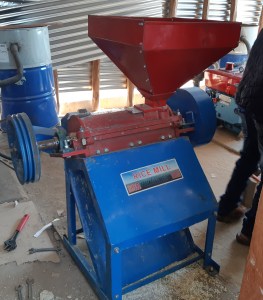
Microprojects are being identified and initiated by community health committees in the 20 communities that the Project works with in Inhambane Province. The activities for the microproject work include grinding mills (moajeiras) for processing corn into flour, better latrines (Latrinas Melhoradas), and village chicken and egg production.

The first training sessions have now occurred for the microproject development in the communities of  Chocolane and Bie. This training focused on the grinding mill (moajeira), which is the microproject the communities wish to initiate. The training worked on the technical aspects of running a grinding mill, how to do accounting procedures, how to divide the work and responsibilities, and how to address issues of gender and key leadership roles for women.


Welcome!

Thank you for your interest in the Mozambique-Canada Maternal Health Project. This project came to an end on June 30, 2024. You may continue to the site to see our final update and find out what we did, but please keep in mind that it is an archived site and will no longer be updated.

We now have a new project**: Sexual and Reproductive Health for Young Women in Inhambane**. We will be activating its website soon.

The new project builds on the old one, but with some changes to adapt to new realities. We will continue to seek improved, sexual, reproductive and maternal health and rights for women, now focusing more on adolescent girls and younger women, within the context of model communities of care, taking into consideration their families and their communities. We will continue to partner with community health communities (now 30 compared to 20) within selected districts in Inhambane (now 6 rather than 5). We will also continue to partner with the provincial health directorate (DPSI) to improve infrastructural and human resources in the health system. And we will continue to carry out helpful research and disseminate information.

Let us know if you would like to be notified when our new site is up!