


Wa sati wa nhenha: Women strengthening health
In Mozambique, the Xitswa phrase, “wa sati wa nhenha” means “strong women” or “women’s strength”. This month, our project was selected for a special U of S podcast episode. Jessie Forsyth and Nazeem Muhajarine were the featured researchers, speaking about the Mozambique Canada Maternal Health Project in Mozambique. The program introduction follows and the links to the episode are at the end.
Jessie Forsyth and Nazeem Muhajarine are two of the University of Saskatchewan health researchers learning how to build on “women’s strength” in rural and remote communities.
And they’ve done it during a pandemic.
In this episode, hear why the U of S’s long term health commitment to people in Inhambane province has paid off, with the recent opening of five new maternal health clinics, along with three new waiting homes for expectant mothers.
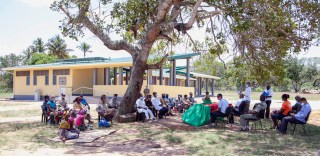
Each one was built during the Covid-19 pandemic. They’re all in remote and rural areas, and they’re all solar-powered, situated next to a deep borehole for water.
“From March to October, the construction finished on time and it came in under budget,” said Nazeem Muhajarine, principal investigator for the Mozambique Canada Maternal Health Project. “How many times can we say that?”
Even during the pandemic, Mozambican nurses and health workers trained intensively on newborn resuscitation techniques, obstetrical interventions and safe reproductive care for newborns and their mothers. The overall goal is the same: cut infant and maternal mortality rates, and build strong, resilient communities.
“Mozambican policy ever since the liberation movement has been about promoting gender equality. It’s actually enshrined in the constitution,” said project director Jessie Forsyth, who is based a few kilometres outside Inhambane City.
“But it’s difficult. Change is difficult,” Forsyth said.

Forsyth said alongside new bricks-and-mortar health facilities, women in each of the 20 communities the project serves now run income-generating micro-projects. Those include drilling wells, installing new latrines, building flour grinders and establishing chicken and egg production.
Forsyth calls that a “significant shift” for rural Mozambican women.“First, they provide spaces for women’s leadership and have women respected in their roles,” said Forsyth. “They also improve nutrition and improve sanitation, and in the case of the flour grinders, they really reduce the amount of physical labour that women are most often asked to bear.”
She said health care works best when it’s ‘people-centred’. As such, each of the 20 communities has established a health committee including men, women, traditional healers, and other local authorities. In this episode, Forsyth discusses how and why those committees prioritize women and children’s health and well-being.
“This is not a one-off project,” said Muhajarine. “My hope is our work in Mozambique, even during this unprecedented year, will be seen as a turning point for women and girls and families.”
Episode website: https://ovdr-com.libsyn.com/wa-sati-wa-nhenha-women-strengthening-health
Apple podcast: https://podcasts.apple.com/us/podcast/wa-sati-wa-nhenha-women-strengthening-health/id1513240190?i=1000514689412
Youtube version: https://www.youtube.com/watch?v=_mfRIKt7BtI
Recent Comments